Thermal mass
Dense earthen walls absorb and release heat slowly, helping temper daily indoor temperature swings when designed as a complete envelope.

Solid compressed-earth blocks for enduring desert architecture—supported by clear product data, practical production, and project-ready logistics.
Planning figures shown. Confirm current testing, dimensions, pricing, and availability before procurement.
Fortress Adobe manufactures solid compressed-earth blocks in Arizona. We supply block, production planning, and product information so owners, architects, and builders can coordinate the unit, permitted wall design, documentation, and delivery before construction begins.
See how a project movesDense earthen walls absorb and release heat slowly, helping temper daily indoor temperature swings when designed as a complete envelope.
Earth units do not provide fuel for a fire. Final wall ratings still depend on the tested assembly, finishes, penetrations, and detailing.
Monolithic blocks contain no hollow cells. The wall system coordinates project-specific foundations, bond beams, lintels, and roof connections.
On suitable projects, local soil and on-site production can reduce long-haul material movement. Soil suitability must be evaluated first.
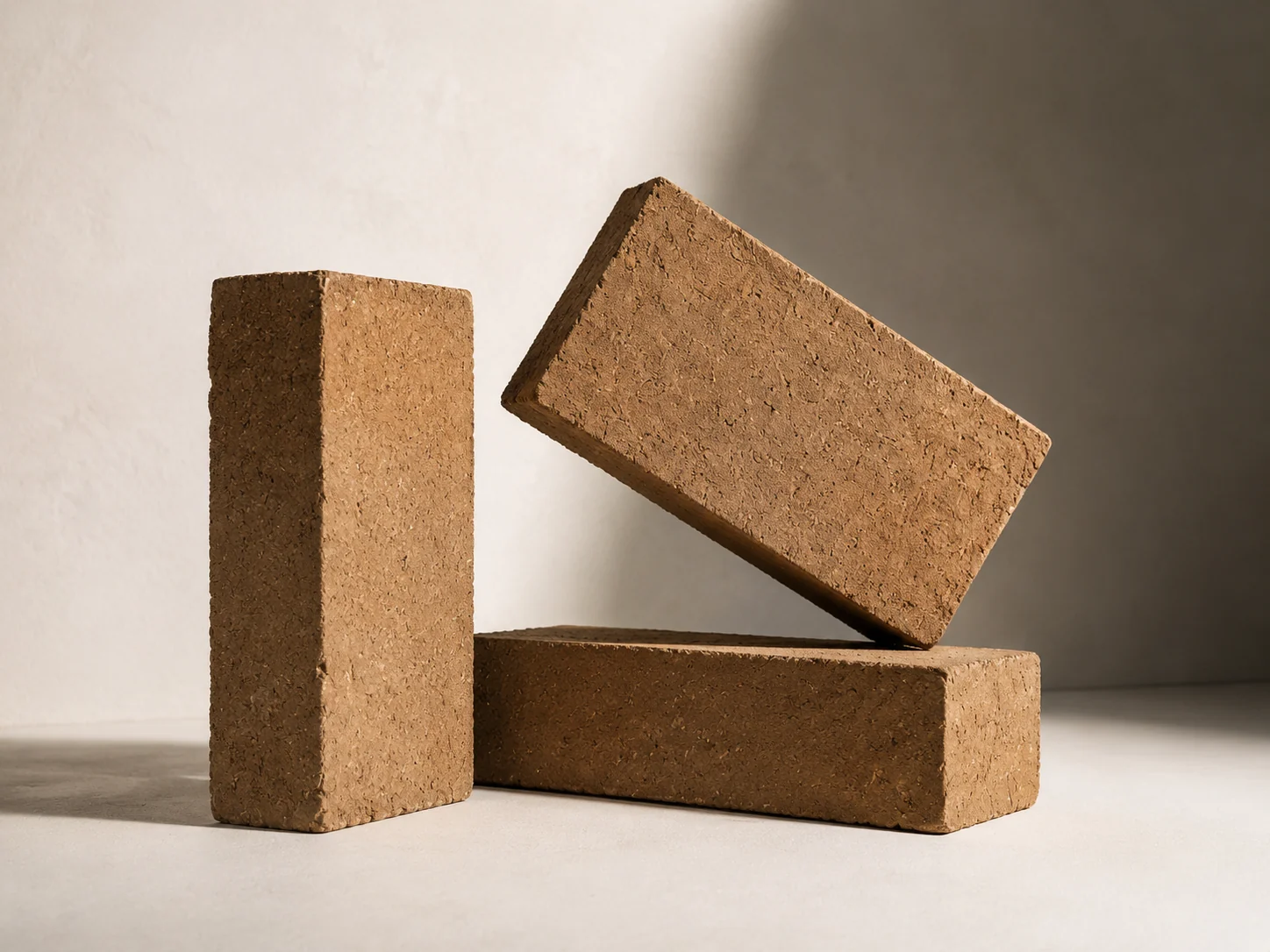 Solid monolithic units
Prepared earth is stabilized with lime and Portland cement, then hydraulically pressed into a dense solid unit. Final use is determined by the permitted wall design.
Preliminary product brief. Confirm current testing, dimensions, pricing, availability, and approved application before procurement.
Use these published figures for early project planning. Current testing, dimensions, pricing, and availability are confirmed during project review.
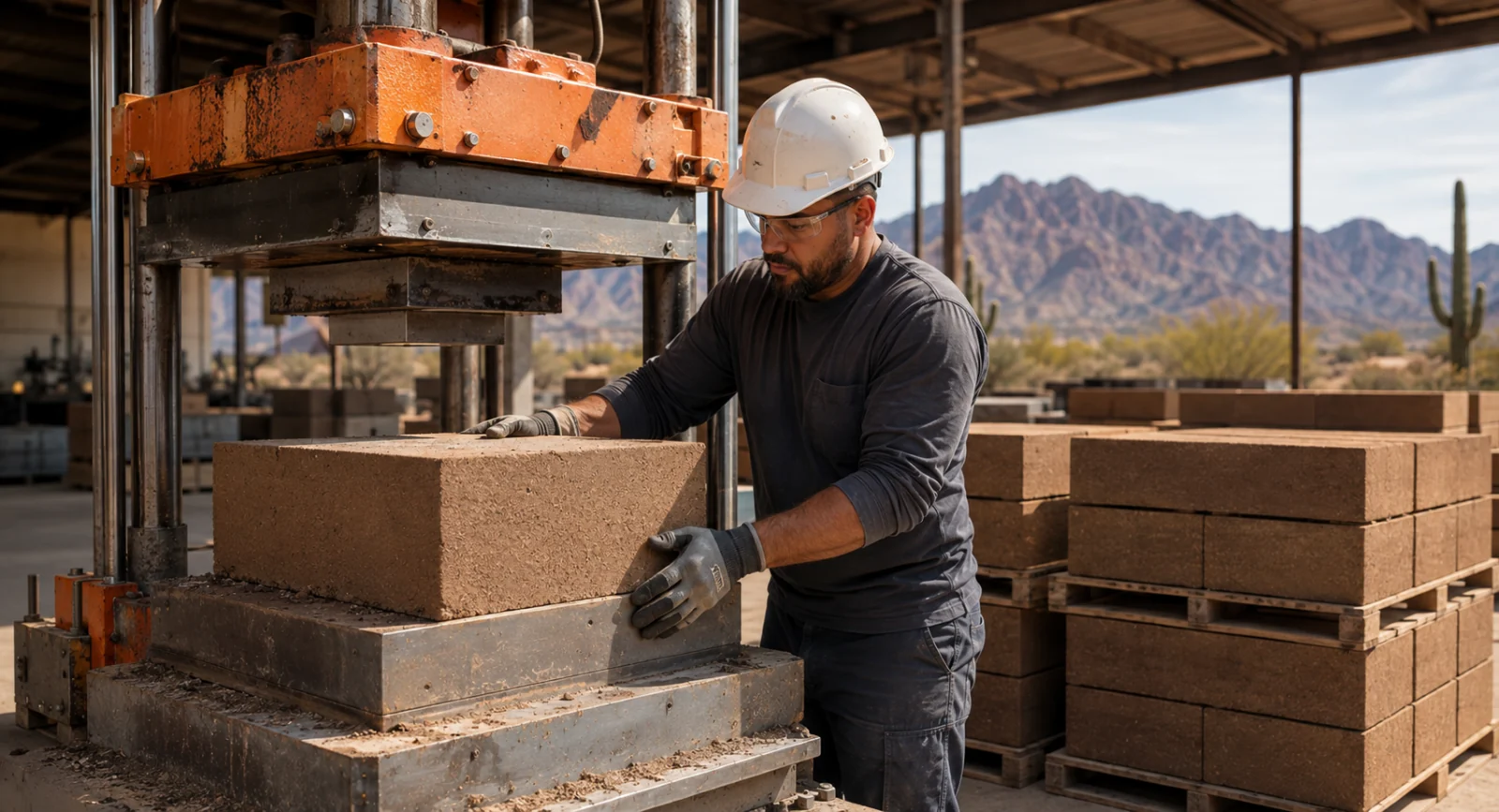 Block production & quality control
A professional workflow makes the material easier to specify, price, schedule, and build with.
Location, drawings, wall area, schedule, and the team already involved.
Stabilized or natural, yard production or evaluated on-site pressing, and preliminary quantities.
Current product data, samples, testing, and the details your design team needs for review.
Lead time, pallets, unloading, access, sequencing, and job-site handling.
Explore how solid compressed-earth construction supports contemporary desert homes, durable wall systems, and coordinated project planning.
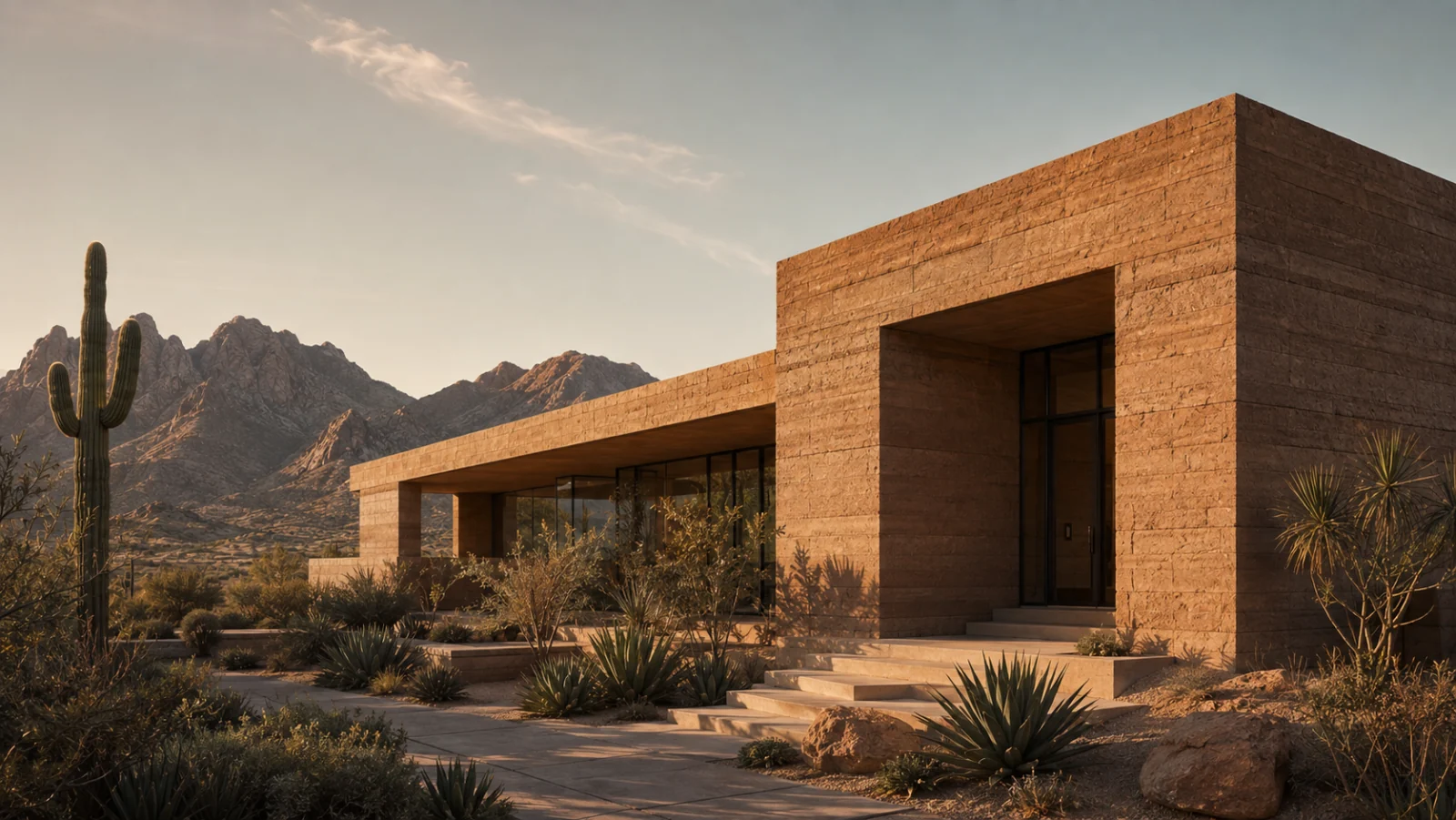
Rounded earthen walls, exposed timber vigas, and a shaded entry bring the enduring character of classic adobe architecture to the Arizona desert.
View application notes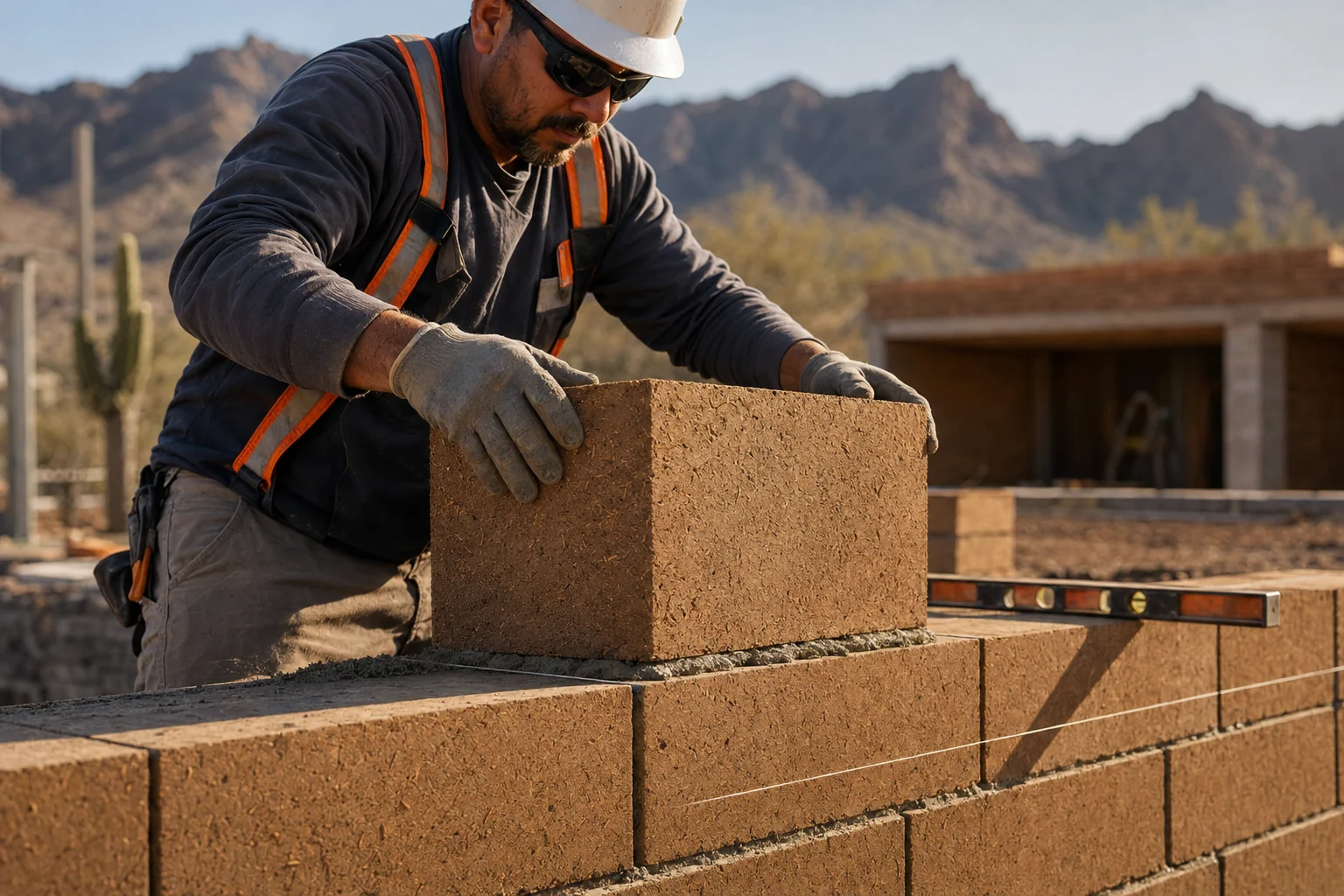
A full mortar bed, aligned courses, and project-specific structural detailing.
Review the workflow
Block, structure, envelope, openings, services, finishes, and logistics work best as one coordinated system.
Compressed-earth work is evaluated through adopted codes, local amendments, material testing, and project-specific professional design. Coconino County has a specific earthen-construction pathway; elsewhere, begin with the county permitting office and confirm whether the county, a city, or a town has authority over the site.
Coordinate the permitted wall assembly, lateral support, openings, bond beam, moisture control, energy compliance, and connections.
Provide current unit dimensions, sampling, compressive testing, composition, tolerances, and handling information.
Confirm staging, pallet access, lifting, protection, mortar or stacking method, inspections, and finish sequence.
The right path depends on soil suitability, project quantity, access, haul distance, schedule, and where quality control is best maintained.
Standardized production, palletized handling, and freight quoted from project distance and unloading needs.
For suitable volume, access, schedule, and soil. Feasibility is confirmed before equipment mobilization.
Use these resources to support early design, estimating, and procurement conversations. Project-specific requirements are confirmed during review.
Compressed-earth construction can be permitted, but the path depends on the jurisdiction, adopted code, wall design, testing, and sealed project documents. Fortress supplies product information; the architect or engineer coordinates the permitted assembly.
No. Fortress Adobe blocks are solid monolithic compressed-earth units without CMU-style cells, cores, or internal cavities.
Stabilized block adds lime and Portland cement to improve durability and moisture resistance. Natural block uses the prepared earth mix without those stabilizers and is positioned for protected interior applications pending project review.
Potentially. An on-site program starts with location, access, volume, schedule, and soil evaluation. Not every soil or project is a good candidate, so feasibility is confirmed before mobilization.
Fortress Adobe supplies blocks, production planning, and product information. Owners coordinate licensed design and construction professionals, and the final scope is confirmed project by project.
A compressed-earth block (CEB) is a solid masonry unit made by hydraulically pressing a prepared earth mix. Fortress Adobe offers stabilized blocks with lime and Portland cement, and natural blocks without those stabilizers. The wall assembly and permitted use are determined for each project.
Start with the project location, drawings or wall area, estimated quantity, target schedule, and site access. Yard-pressed blocks are handled on pallets. On-site pressing depends on soil suitability, project volume, schedule, and access; freight and feasibility are quoted for the project.
The Technical Resources page includes a preliminary block data sheet and an architect and builder overview. Confirm current testing, dimensions, composition, pricing, and availability with Fortress Adobe before specifying or ordering material.
Share the location, drawings, target schedule, and what you know about quantity. Fortress can frame the next useful step.